
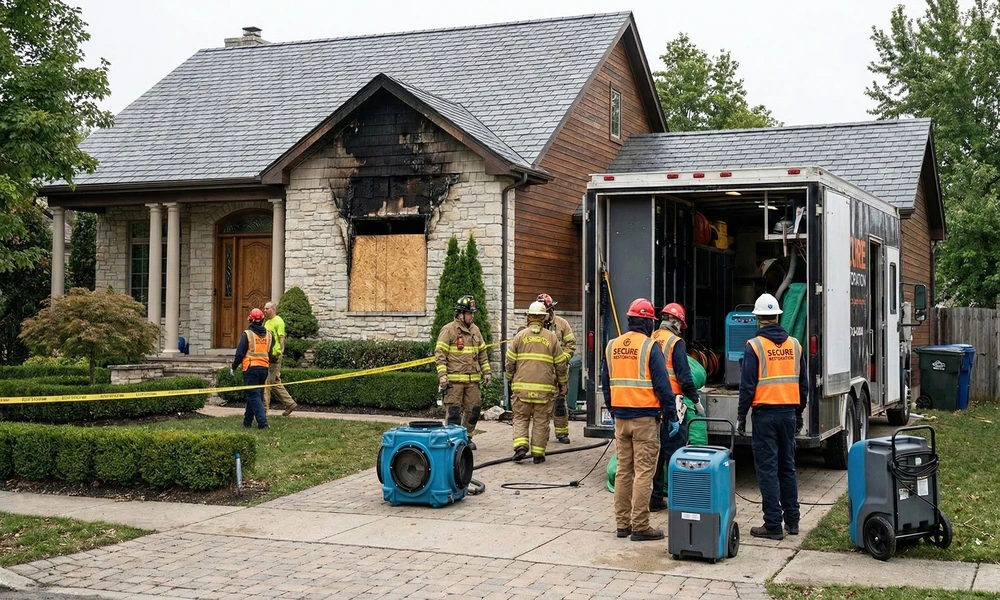
Key Takeaways
Fire damage restoration involves more than repairing visible burn marks. Smoke, soot, water, and hidden structural damage may also need professional attention.
Homeowners should prioritize safety, document the damage, and secure the property before restoration work begins.
Professional cleanup may include soot removal, odor treatment, air filtration, and cleaning or evaluation of salvageable belongings.
The restoration process typically includes inspection, damage assessment, cleanup, repairs, and a final review.
Choosing an insured and qualified restoration company helps homeowners understand the work required, expected timeline, and available services.
Clear communication and proper documentation can make the restoration and insurance claims process easier to manage.
The First Steps After Fire Damage in Hunterdon County
Experiencing a house fire can be overwhelming. Once the fire department confirms that the property is safe to approach, homeowners may need to make several important decisions. Taking the right steps early can help prevent additional damage and prepare the property for restoration.
Assessing Smoke, Soot, and Structural Damage
Fire can affect more than the areas directly touched by flames. Smoke and soot may spread through rooms, walls, ceilings, furniture, and ventilation systems. Water used to extinguish the fire can also damage flooring, drywall, insulation, and personal belongings.
A professional inspection helps identify both visible and hidden problems. Restoration specialists may examine:
- Walls and Ceilings: Look for discoloration, soot deposits, blistering paint, and signs of heat damage.
- Structural Components: Evaluate potentially weakened framing, beams, floors, and other building materials.
- Electrical Systems: Identify areas that may require inspection by a qualified electrician before power is restored.
- HVAC Systems: Check whether smoke and soot have entered ductwork or equipment.
- Water Damage: Look for moisture left behind by firefighting efforts.
Homeowners should avoid entering areas that may be structurally unsafe or handling damaged electrical equipment. A professional assessment can help determine which areas are safe to access and what repairs are necessary.
Securing Your Property to Prevent Further Damage
After a fire, damaged windows, doors, roofing, and other openings can leave a home exposed to rain, wind, unauthorized entry, and additional property loss.
Depending on the condition of the building, temporary protection may include:
- Boarding up broken windows and doors.
- Covering damaged roof sections with appropriate temporary materials.
- Restricting access to unsafe areas.
- Arranging temporary fencing or other security measures when needed.
- Protecting unaffected areas from additional debris or water intrusion.
These measures are often referred to as emergency board-up and property stabilization services. Homeowners should coordinate with restoration professionals and their insurance provider before making non-emergency changes to the property.
Professional Fire Damage Cleanup: Removing Smoke, Soot, and Odors
Once the property has been assessed and secured, cleanup can begin. This stage focuses on removing fire-related residue, addressing odors, and evaluating which materials and belongings can be restored.
Simply wiping down visible soot is rarely enough. Smoke particles can settle in hard-to-reach areas, while certain materials may absorb persistent odors.
Smoke and Soot Removal Techniques
Smoke and soot require different cleaning approaches depending on the surfaces affected and the type of residue left behind. Using the wrong cleaning method can spread soot or cause additional staining.
Professional restoration teams may use:
- HEPA Vacuum Systems: Help collect fine particles from appropriate surfaces without spreading them unnecessarily.
- Air Scrubbers: Filter airborne particles during cleanup when properly selected and positioned.
- Dry Cleaning Sponges: Specialized chemical sponges may remove soot from certain surfaces.
- Appropriate Cleaning Solutions: Products are selected based on the affected material and residue.
- Odor Treatment: Professional methods may be used to address smoke odors that remain after physical cleaning.
The goal is to clean affected areas while protecting materials that can be salvaged. The appropriate method depends on the extent of contamination, surface type, and condition of the property.
Salvaging Furniture, Documents, and Personal Belongings
Personal belongings can be among the most difficult parts of fire recovery. Some items may be cleaned and restored, while others may be too damaged or contaminated to keep.
A detailed inventory can help homeowners and restoration professionals organize the recovery process. Important considerations include:
- Material Type: Wood, metal, fabric, electronics, and paper require different restoration approaches.
- Damage Severity: The level of heat, smoke, soot, and water exposure affects whether an item can be recovered.
- Sentimental Importance: Family photographs, heirlooms, and personal documents may deserve special attention.
- Restoration Cost: Compare the cost and practicality of restoration with replacement.
- Safety: Food, medications, cosmetics, and certain porous materials may not be safe to reuse after fire exposure.
Photographing belongings and keeping an inventory can also help support insurance documentation. Restoration professionals may provide specialized contents cleaning or coordinate with companies that handle delicate items.
The Fire Damage Restoration Process: What Happens From Start to Finish
Understanding the restoration process can help homeowners know what to expect after the initial emergency. Although every property is different, professional fire damage restoration generally follows several stages.
Initial Inspection and Damage Assessment
The process usually begins with a detailed inspection. Restoration professionals evaluate the affected areas, identify immediate concerns, and determine the work required to restore the property.
This may include:
- Inspecting visible fire, smoke, and soot damage.
- Identifying water damage from firefighting efforts.
- Checking for hidden moisture in affected building materials.
- Photographing and documenting damaged areas.
- Preparing an initial scope of work and restoration plan.
Depending on the situation, additional evaluations may be needed from structural engineers, electricians, plumbers, or other qualified specialists.
Cleanup, Repairs, and Reconstruction
After the assessment, restoration work moves into cleanup and repair. The exact sequence depends on the property’s condition and the extent of the damage.
Homeowners may expect some or all of the following:
- Debris Removal: Damaged materials are removed when they cannot be safely restored.
- Water Mitigation: Remaining moisture is addressed to help prevent further deterioration and mold growth.
- Smoke and Soot Cleanup: Affected surfaces and contents are cleaned using suitable methods.
- Odor Treatment: Appropriate procedures are used to reduce or remove lingering smoke odors.
- Structural Repairs: Damaged drywall, flooring, framing, roofing, or other components are repaired or replaced as needed.
- Finishing Work: Painting, flooring installation, and other final improvements help return the property to usable condition.
Not every restoration project requires complete reconstruction. Some homes may need only localized repairs, while properties with extensive damage may require a much longer recovery process.
Final Inspection and Property Handover
Before restoration is considered complete, the finished work should be reviewed. This helps confirm that agreed repairs have been completed and that remaining concerns have been addressed.
A final review may include:
- Checking repaired walls, ceilings, floors, and other surfaces.
- Confirming that affected areas have been cleaned.
- Reviewing completed work against the agreed scope.
- Addressing outstanding issues or corrections.
- Providing relevant project documentation.
Homeowners should ask questions about any remaining concerns and make sure they understand any maintenance recommendations before the property is returned to normal use.
Choosing a Fire Damage Restoration Company in Hunterdon County
The restoration company you choose can influence how smoothly the recovery process goes. Homeowners should look for a provider with relevant experience, appropriate insurance, clear communication, and the ability to coordinate the services their property requires.
Verify Insurance, Qualifications, and Experience
Before hiring a restoration company, ask about its experience handling residential fire damage and confirm that it carries appropriate insurance.
Consider checking:
- Business Credentials: Ask about applicable registrations, licenses, and industry qualifications.
- Insurance Coverage: Confirm appropriate liability insurance and worker coverage.
- Relevant Experience: Look for experience with smoke cleanup, soot removal, water mitigation, and reconstruction.
- Safety Procedures: Ask how the company evaluates unsafe areas and protects workers and occupants.
- Service Capabilities: Determine whether the company handles the required work directly or coordinates with other specialists.
Not every restoration task requires the same qualification. Electrical work, structural engineering, and certain construction activities may need appropriately licensed professionals.
Review Customer Feedback and Communication Practices
Online reviews, references, and examples of completed projects can help homeowners understand how a company works with clients.
Look for feedback about:
- Responsiveness during emergencies.
- Clear explanations of the restoration process.
- Professional conduct and property protection.
- Timely project updates.
- Quality of completed repairs.
- How concerns or unexpected issues are handled.
A dependable restoration provider should explain what needs to be done, why it is necessary, and what homeowners can expect at each stage.
For local homeowners, Fire damage restoration hunterdon county is an important service to consider when looking for professional assistance after a fire. Comparing services and asking detailed questions can help you choose a provider that fits your property’s recovery needs.
What Affects the Fire Damage Restoration Timeline?
There is no single timeline for every fire damage restoration project. The time required depends on the severity of the fire, the amount of smoke and water damage, the size of the property, and the repairs involved.
Some factors that can affect the schedule include:
- Extent of Damage: A small affected area may require less work than a property with widespread structural damage.
- Water and Moisture Issues: Drying and moisture-related repairs can add time.
- Material Availability: Replacement materials and specialized equipment may affect scheduling.
- Permit and Inspection Requirements: Certain repairs may require approvals or inspections.
- Insurance Coordination: Documentation, coverage reviews, and claim decisions may affect when some work proceeds.
- Specialist Services: Structural, electrical, or other technical evaluations may be necessary.
Homeowners should request a project timeline and ask the restoration company to provide updates when unexpected delays or additional repairs arise.
FAQ
What should homeowners do immediately after a house fire?
Wait until the fire department confirms that the property is safe to approach. Contact your insurance provider, document visible damage from a safe location, and arrange professional assistance for inspection and property protection. Avoid entering unstable areas or handling damaged electrical systems.
How long does fire damage restoration take?
The timeline depends on the severity of the damage and the amount of cleaning, drying, repair, and reconstruction required. Minor projects may take considerably less time than homes requiring extensive structural work. A restoration company can provide a more accurate estimate after inspecting the property.
Does fire damage restoration include smoke and soot removal?
Yes. Fire restoration commonly includes cleaning smoke and soot from affected surfaces and contents. Depending on the damage, it may also involve air filtration and odor treatment.
Can furniture and personal belongings be saved after a fire?
Some belongings can be professionally cleaned and restored, but recovery depends on the material, level of exposure, and type of damage. Items such as electronics, food, medications, and heavily contaminated porous materials may require special evaluation or disposal.
Will homeowners insurance cover fire damage restoration?
Coverage depends on the specific insurance policy, exclusions, deductible, and circumstances of the fire. Homeowners should contact their insurer, document the damage, and review the policy before assuming which restoration costs will be covered.
Should homeowners clean up fire damage themselves?
Homeowners can document damage and take basic steps to protect unaffected belongings when it is safe. However, extensive soot removal, smoke odor treatment, structural repairs, and cleanup involving potentially hazardous materials should be handled by qualified professionals.
How can homeowners choose a reliable fire restoration company?
Review the company’s relevant experience, insurance coverage, qualifications, customer feedback, and communication practices. Ask for a written scope of work, an estimated timeline, and details about which services are included.
How can homeowners reduce the risk of future fire damage?
Install and maintain smoke alarms, keep electrical systems in good condition, use heating equipment safely, and create a household fire escape plan. Regularly review fire safety practices and keep appropriate fire extinguishers accessible.
Useful Resources
- American Red Cross – Offers resources on fire safety and recovery assistance.
- National Fire Protection Association – Provides information on fire safety, prevention, and building codes.
- FEMA – Federal emergency management services, including guidance on disaster recovery.
- Institute of Inspection, Cleaning and Restoration Certification – Professional development and training for restoration specialists.
- Centers for Disease Control and Prevention – Informational resources on health effects tied to smoke and fire damage.
- HomeAdvisor – A tool for finding and comparing home service professionals, including restoration services.
- Angie’s List – Reviews and ratings for local service providers, including fire restoration companies.
- Simply Renovate – A helpful resource for understanding home restoration processes and locating qualified contractors.
- Consumer Reports – Provides reviews and advice on home products, including safety equipment and restoration services.